December 14, 2025
From Bartender to $96K in 8 Months: How One Publisher Built a Six-Figure Book Business
If you prefer “watching” over “reading” you can find the full 🎥 video version here!

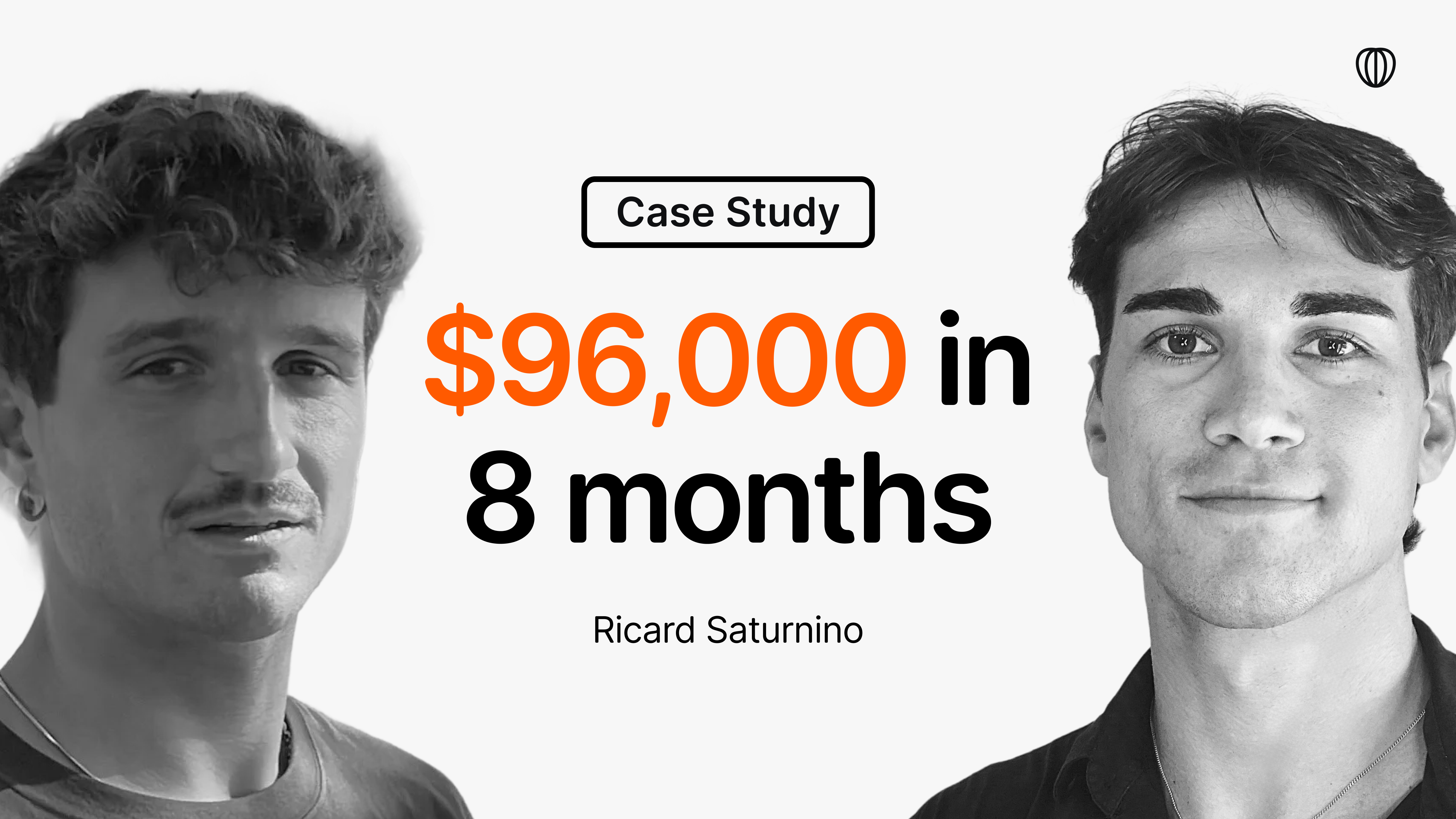
Most people starting an online business dream of replacing their income. Ricard did it in less than a year—and he did it publishing books on Amazon. By his eighth month, he'd generated $96,000 in royalties. By month nine, he quit his bartending job to publish full-time. And he did it all while working late nights, reinvesting every dollar, and focusing on a strategy most people overlook: quality over quantity.
This isn't a story about publishing hundreds of books or gaming the system. It's about understanding what readers actually want, creating something valuable, and building a business that compounds over time.
The Path Before Publishing
Ricard didn't start with book publishing. He studied economics, earned a master's degree in investment strategy, and began a corporate career. But the 8-10 hour office days didn't fit.
He tried Amazon FBA first—the reselling model where you buy products and flip them for profit. He made it work, generating $10,000 in revenue and $3,000 in profit monthly. But scaling was difficult, and when he moved to Australia for a fresh start, he left FBA behind.
That's when he discovered Kindle Direct Publishing (KDP). He saw something different: a business model with low barriers to entry, no inventory headaches, and the ability to focus entirely on growth and marketing instead of logistics. He started bartending to fund his new venture, working late nights and pouring every spare dollar into his publishing business. His goal was clear from day one: make this the main income, not a side hustle.
The First Book That Changed Everything
Ricard launched his first book in late November, right at the tail end of Q4. Within two to three days, he made his first sales. But it wasn't just about the first sale. His first book became a bestseller in its niche. How? He didn't try to reinvent the wheel. He studied his top competitor and made a simple decision: beat them at everything. Better cover. Better content. Better reviews. Better layout. He focused on winning every detail that mattered to the reader.
The niche he chose was health and wellness—one of the largest categories on Amazon, but also one of the most competitive. Most people would avoid it. Ricard saw an opportunity. The competition was high, but the quality was low. If he could publish something genuinely valuable, he could stand out. He was right.
The 80/20 Rule in Action
Today, Ricard has 29 books published. But here's what most people miss: fewer than five books generate 80% of his royalties. This is the core of his strategy. He's not chasing volume. He's building assets that last.
"The important thing is to create a book that in six months is going to be selling, or even in a year, or even in two years," he explains. "That's only possible if you create high-quality books."
Low-quality books might generate quick sales, but they don't scale. Bad reviews kill momentum. High-quality books, on the other hand, compound. They earn trust, maintain rankings, and continue selling long after launch.
Understanding the Dream Avatar
One of Ricard's biggest advantages is his obsession with understanding what his readers actually want. He doesn't create a product and then try to sell it. He figures out what people are searching for, what problems they're trying to solve, and what gaps exist in the market—then he creates the solution.
With AI tools, this process has become faster and more precise. He analyzes reviews, scans Reddit discussions, monitors social media trends, and studies what's already selling. The research that used to take two weeks now takes minutes.
But the research is only the beginning. The real work is in execution: creating a book that delivers on the promise, editing it thoroughly, designing a professional layout, and ensuring every detail aligns with what the reader expects.
The AI Advantage
Ricard started publishing just as AI tools were becoming accessible. Early on, he worked with ghostwriters, investing heavily in content creation. Now, he uses AI to handle much of the heavy lifting. But he's clear about one thing: AI is a tool, not a shortcut.
"You have to edit it. You have to check it. You have to do a proper layout and quality check," he says. The goal isn't to publish faster—it's to publish better, more efficiently.
AI allows him to focus on what matters most: finding the right angle, understanding the audience, and ensuring the final product is something readers genuinely value.
The Money Behind the Growth
When Ricard started, he invested around $100 per day in advertising—roughly $3,000 per month. That's higher than most beginners, but he had a plan: reinvest everything.
"In the first months of your business, you have to reinvest almost everything," he says. "That's the only way to grow as fast as I did."
Today, 90% of his business expenses go toward advertising. The formula is simple: the more money you put into the machine, the more you get out—as long as the product is solid. But here's the shift: when he started, 80% of his budget went to creating books. Now, with AI, that cost has dropped dramatically. A beginner can start with $2,000 to $3,000 and build momentum without the upfront content costs that used to be a barrier.
The Mindset That Made It Possible
Ricard's success wasn't just about strategy. It was about clarity.From the beginning, his goal was to make publishing his main income. Not a side project. Not a hobby. The primary business. That clarity shaped every decision. He worked long hours, reinvested aggressively, and stayed focused on the end goal: quitting his bartending job and publishing full-time.
Last month, he did exactly that. Now, he's targeting $40,000 in revenue and $20,000 in profit by December. His short-term focus is on launching more books in proven niches. His long-term vision is freedom—time and financial stability to live and work from anywhere. He's already living that vision. After spending months in Australia, he's planning to return to Spain to visit family, then move to a new country he's been dreaming about for years.
What's Next
Ricard isn't stopping at KDP. He's exploring IngramSpark for wider distribution, Audible for audiobooks, and TikTok Shop for direct sales. TikTok Shop, in particular, has caught his attention. The platform's spillover effect means that when one creator sells a book in your niche, the traffic can lift other similar titles. It's a new frontier, and he's positioning himself to take advantage.
But the foundation remains the same: find a good niche, understand what the consumer wants, and launch quality books that solve real problems.
The Takeaway
Ricard's story isn't about luck or shortcuts. It's about focus, reinvestment, and a relentless commitment to quality. He didn't publish hundreds of books. He published the right books. He didn't chase trends. He found a niche with high demand and low-quality competition, then delivered something better. And he didn't wait for the perfect moment. He worked nights, saved money, and reinvested everything into a business model he believed in.
For anyone stuck in a 9-to-5, wondering if there's another path, Ricard's journey offers a clear answer: there is. But it requires clarity, discipline, and a willingness to do the work that most people won't. The opportunity is there. The tools are accessible. The question is whether you're ready to commit.
Most people starting an online business dream of replacing their income. Ricard did it in less than a year—and he did it publishing books on Amazon. By his eighth month, he'd generated $96,000 in royalties. By month nine, he quit his bartending job to publish full-time. And he did it all while working late nights, reinvesting every dollar, and focusing on a strategy most people overlook: quality over quantity.
This isn't a story about publishing hundreds of books or gaming the system. It's about understanding what readers actually want, creating something valuable, and building a business that compounds over time.
The Path Before Publishing
Ricard didn't start with book publishing. He studied economics, earned a master's degree in investment strategy, and began a corporate career. But the 8-10 hour office days didn't fit.
He tried Amazon FBA first—the reselling model where you buy products and flip them for profit. He made it work, generating $10,000 in revenue and $3,000 in profit monthly. But scaling was difficult, and when he moved to Australia for a fresh start, he left FBA behind.
That's when he discovered Kindle Direct Publishing (KDP). He saw something different: a business model with low barriers to entry, no inventory headaches, and the ability to focus entirely on growth and marketing instead of logistics. He started bartending to fund his new venture, working late nights and pouring every spare dollar into his publishing business. His goal was clear from day one: make this the main income, not a side hustle.
The First Book That Changed Everything
Ricard launched his first book in late November, right at the tail end of Q4. Within two to three days, he made his first sales. But it wasn't just about the first sale. His first book became a bestseller in its niche. How? He didn't try to reinvent the wheel. He studied his top competitor and made a simple decision: beat them at everything. Better cover. Better content. Better reviews. Better layout. He focused on winning every detail that mattered to the reader.
The niche he chose was health and wellness—one of the largest categories on Amazon, but also one of the most competitive. Most people would avoid it. Ricard saw an opportunity. The competition was high, but the quality was low. If he could publish something genuinely valuable, he could stand out. He was right.
The 80/20 Rule in Action
Today, Ricard has 29 books published. But here's what most people miss: fewer than five books generate 80% of his royalties. This is the core of his strategy. He's not chasing volume. He's building assets that last.
"The important thing is to create a book that in six months is going to be selling, or even in a year, or even in two years," he explains. "That's only possible if you create high-quality books."
Low-quality books might generate quick sales, but they don't scale. Bad reviews kill momentum. High-quality books, on the other hand, compound. They earn trust, maintain rankings, and continue selling long after launch.
Understanding the Dream Avatar
One of Ricard's biggest advantages is his obsession with understanding what his readers actually want. He doesn't create a product and then try to sell it. He figures out what people are searching for, what problems they're trying to solve, and what gaps exist in the market—then he creates the solution.
With AI tools, this process has become faster and more precise. He analyzes reviews, scans Reddit discussions, monitors social media trends, and studies what's already selling. The research that used to take two weeks now takes minutes.
But the research is only the beginning. The real work is in execution: creating a book that delivers on the promise, editing it thoroughly, designing a professional layout, and ensuring every detail aligns with what the reader expects.
The AI Advantage
Ricard started publishing just as AI tools were becoming accessible. Early on, he worked with ghostwriters, investing heavily in content creation. Now, he uses AI to handle much of the heavy lifting. But he's clear about one thing: AI is a tool, not a shortcut.
"You have to edit it. You have to check it. You have to do a proper layout and quality check," he says. The goal isn't to publish faster—it's to publish better, more efficiently.
AI allows him to focus on what matters most: finding the right angle, understanding the audience, and ensuring the final product is something readers genuinely value.
The Money Behind the Growth
When Ricard started, he invested around $100 per day in advertising—roughly $3,000 per month. That's higher than most beginners, but he had a plan: reinvest everything.
"In the first months of your business, you have to reinvest almost everything," he says. "That's the only way to grow as fast as I did."
Today, 90% of his business expenses go toward advertising. The formula is simple: the more money you put into the machine, the more you get out—as long as the product is solid. But here's the shift: when he started, 80% of his budget went to creating books. Now, with AI, that cost has dropped dramatically. A beginner can start with $2,000 to $3,000 and build momentum without the upfront content costs that used to be a barrier.
The Mindset That Made It Possible
Ricard's success wasn't just about strategy. It was about clarity.From the beginning, his goal was to make publishing his main income. Not a side project. Not a hobby. The primary business. That clarity shaped every decision. He worked long hours, reinvested aggressively, and stayed focused on the end goal: quitting his bartending job and publishing full-time.
Last month, he did exactly that. Now, he's targeting $40,000 in revenue and $20,000 in profit by December. His short-term focus is on launching more books in proven niches. His long-term vision is freedom—time and financial stability to live and work from anywhere. He's already living that vision. After spending months in Australia, he's planning to return to Spain to visit family, then move to a new country he's been dreaming about for years.
What's Next
Ricard isn't stopping at KDP. He's exploring IngramSpark for wider distribution, Audible for audiobooks, and TikTok Shop for direct sales. TikTok Shop, in particular, has caught his attention. The platform's spillover effect means that when one creator sells a book in your niche, the traffic can lift other similar titles. It's a new frontier, and he's positioning himself to take advantage.
But the foundation remains the same: find a good niche, understand what the consumer wants, and launch quality books that solve real problems.
The Takeaway
Ricard's story isn't about luck or shortcuts. It's about focus, reinvestment, and a relentless commitment to quality. He didn't publish hundreds of books. He published the right books. He didn't chase trends. He found a niche with high demand and low-quality competition, then delivered something better. And he didn't wait for the perfect moment. He worked nights, saved money, and reinvested everything into a business model he believed in.
For anyone stuck in a 9-to-5, wondering if there's another path, Ricard's journey offers a clear answer: there is. But it requires clarity, discipline, and a willingness to do the work that most people won't. The opportunity is there. The tools are accessible. The question is whether you're ready to commit.